By The Bob Pike Group Training Team, adapted from Marc Ratcliffe’s session at the 2026 Creative Training Techniques® Conference
Learning transfer happens when participants use what they learned back on the job. Activities support transfer when they make learners recall the content, practice using it, and plan when they’ll apply it. The 13 activities below do at least one of those, and most take five minutes or less.
Key Takeaways
- Learning transfer is the goal of training. Finishing the content isn’t enough.
- Games aren’t a break from content. Used well, they reinforce it.
- Review activities like Find and Fix and game shows make learners pull content from memory.
- Reflection activities like Take-Home Pay and Postcards help learners decide what they’ll actually use.
- Most of these activities work in person and online with small changes.
- In CTTC 2026 evaluations, 93.6% of session ratings agreed attendees would apply something within 30 days (559 breakout evaluations).
You finish a great session. Participants are energized, the evaluations glow, and everyone heads back to work. A month later, little has changed. That gap between learning something and using it is the learning transfer problem, and it’s where most training falls short.
At the 2026 Creative Training Techniques® Conference, trainer Marc Ratcliffe shared 13 activities he uses to close that gap. His starting point: “If they are not playing, they are straying.”
Games and activities support transfer because they turn listeners into participants. When learners recall, discuss, and use content during a session, they’re more likely to remember it and apply it afterward. That’s the core of Participant-Centered Learning.
As Marc puts it, games aren’t the opposite of content. A well-chosen activity can challenge, reinforce, persuade, refocus, and reassure participants. The key is choosing an activity for its learning purpose, not just for fun.
The results show up on the job. After attending Boot Camp, Intermedia’s Partner Enablement Team rebuilt its Sales Kickoff around the Participant-Centered Approach, and knowledge application rose 30% between pre- and post-training assessments. Read the Intermedia case study.
The 13 activities below are grouped by what they do: help learners review, make content memorable, reset attention, and reflect and plan.
Review activities make learners pull information from memory instead of hearing it again. Each time they do, the content gets easier to recall on the job. (For more on why, see: Why People Forget Your Training.)
Place a basket on each table, or open a shared online board. Throughout the session, participants drop in questions as they think of them, especially “How would this work in my job?” questions. Answer them at set points, such as before each break.
Why it helps transfer: It surfaces the real situations where learners plan to use the content, so you can address them before they leave.
Start a visible timer and challenge teams to list as many key points from the last section as they can before it reaches zero. Compare lists and fill in anything they missed.
Why it helps transfer: Recalling content under light time pressure strengthens memory and shows learners what they’ve really retained.
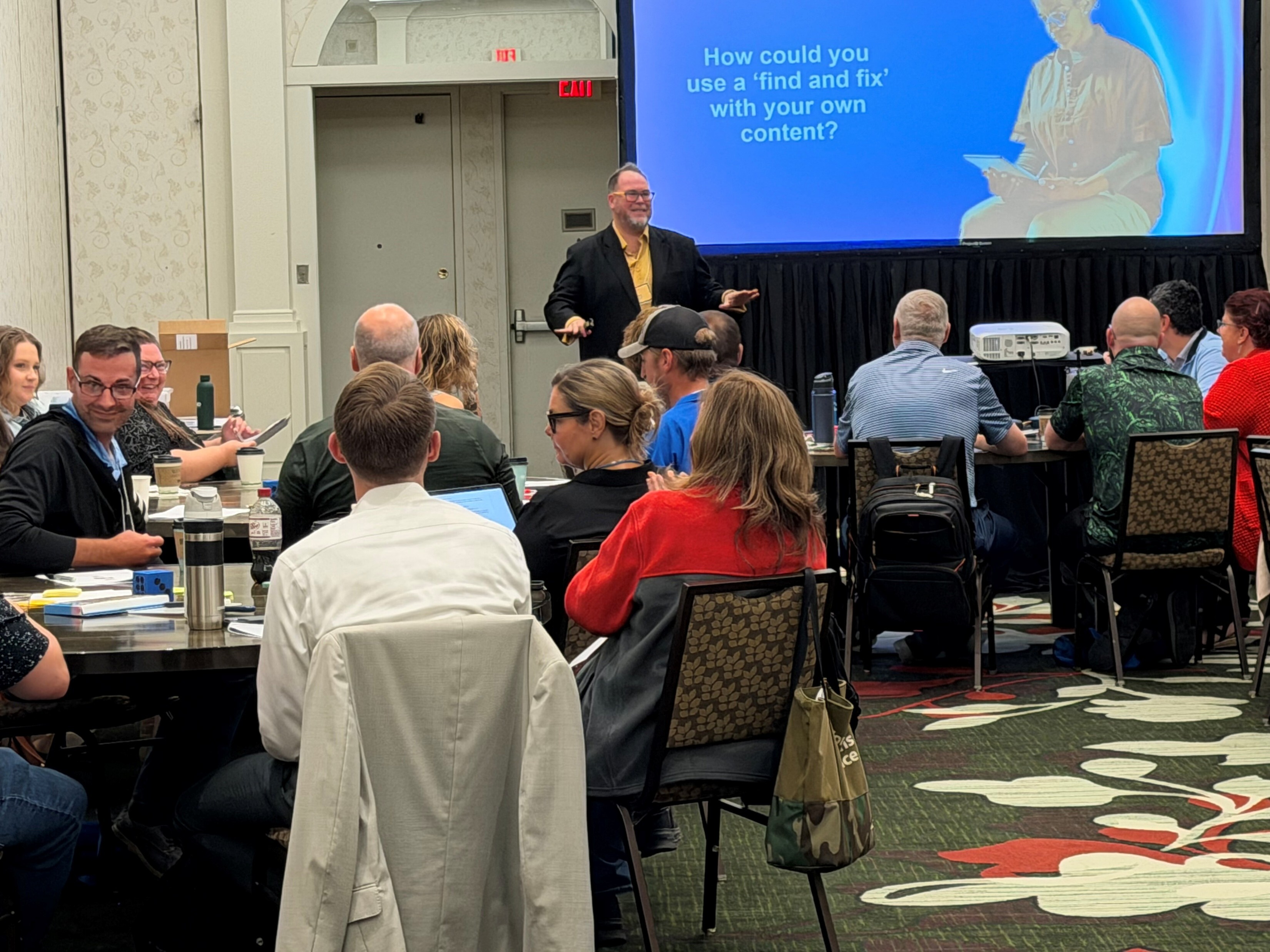
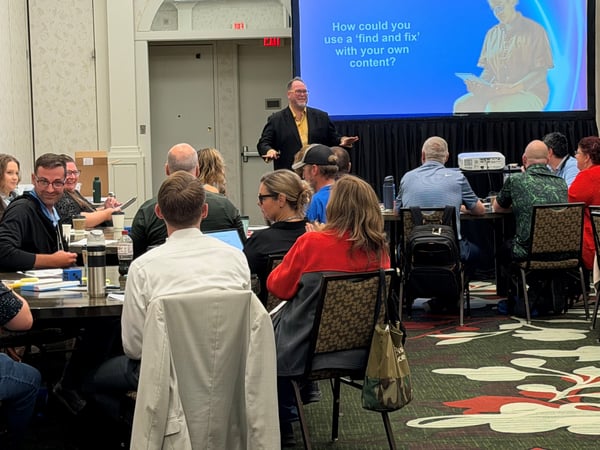
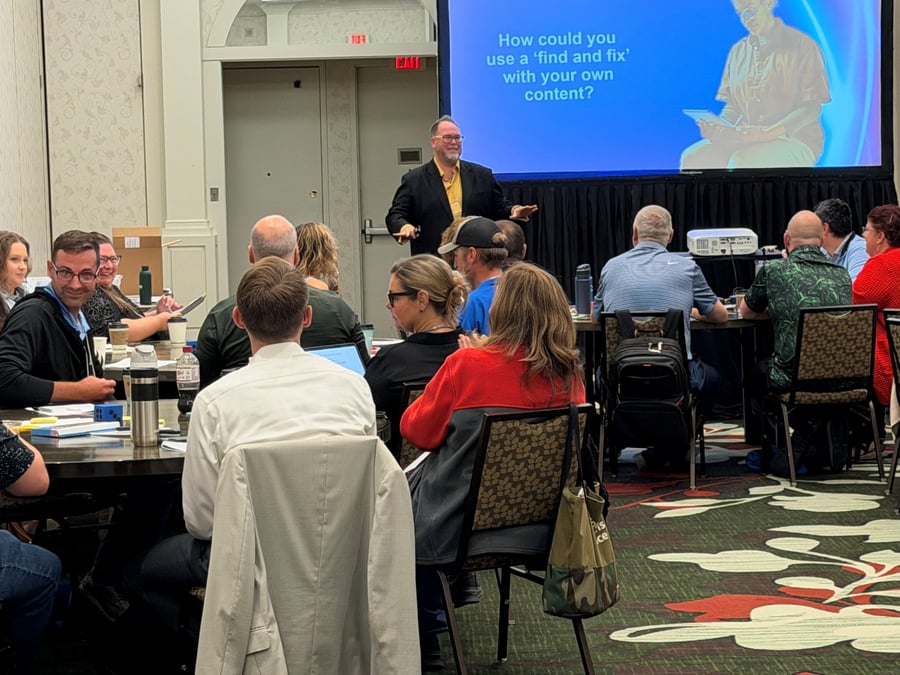
Give small groups a sample with mistakes built in, such as a form, an email, a procedure, or a report. Teams find the errors and fix them using what they’ve learned. Then compare answers as a group.
Why it helps transfer: Learners apply the content to a realistic piece of work, which is close to what they’ll face on the job.
Turn your review into a familiar game show format, such as Family Feud, Jeopardy!, Wheel of Fortune, or Who Wants to Be a Millionaire? Free PowerPoint templates make setup quick, such as Lifewire’s free PowerPoint game templates.
Why it helps transfer: Write the questions as job scenarios (“A customer says… What do you do?”), not just definitions. Then learners practice decisions, not just recall.
Training virtually? Share your screen with the game board and have teams answer in chat or breakout rooms.
Free Guide: 3 Tips for Making Your Messages Stick
Get our favorite activities for reviewing and revisiting content, plus why Participant-Centered Training helps it last.
Connect a key point to a memorable movie quote. The quote becomes a reference point learners can recall later, and it reinforces the content every time they hear it. IMDb’s search lets you find quotes by topic.
Why it helps transfer: A vivid hook makes content easier to retrieve when the moment to use it comes up.
Invite participants to find or write their own quotes that capture a key idea. Post them around the room as a gallery and give everyone a few minutes to walk it and discuss.
Why it helps transfer: When learners choose the words themselves, the idea is in their language, not yours.
Attention drops when learners sit and listen too long. These activities give the brain a reset, so the content that follows has a better chance of sticking. Not sure when to use one? Here’s how to spot an energy drop and adjust mid-session.
Have everyone stand and stretch for 30–60 seconds. To tie it to transfer, add a prompt as they stretch: “Tell the person next to you one thing you’ll try this week.”
Why it helps transfer: Movement restores focus, and the prompt adds a quick moment of recall.
Need more quick resets? Get nine more in our free Virtual Energizers Guide.
Show an image with the numbers 1 to 100 scattered across it. Give participants 30 seconds to find and count the numbers in order, as high as they can. Survey the group, coach them on a better strategy, then run it again.
Why it helps transfer: The jump in scores shows learners firsthand how coaching and practice improve performance, which is exactly what you want them to do back at work.
Give teams limited materials and a few minutes to build the tallest freestanding tower they can. Then debrief: what helped, what got in the way, and how that connects to the session content.
Why it helps transfer: The debrief links a shared experience to the content, giving learners a memorable example to draw on later.
For more on running a strong debrief, listen to “The Art of the Debrief” on The Bob Pike Group podcast.
Ask participants: “What’s your take-home pay so far?” Each person names the most valuable thing they’ve gained from the session, then shares it with a partner or table.
Why it helps transfer: It makes learners decide what’s worth keeping, which is the first step toward using it.
Show a U-Turn card and ask learners to look at the topic from a different or opposing point of view. For example: “What would someone who disagrees with this approach say?”
Why it helps transfer: Looking at a problem from another angle supports creative problem-solving, and it prepares learners for pushback they may get at work.
Show a simple image, such as a ball of yarn, and ask learners to reflect on the training through it. For example: “How is what you learned today like this ball of yarn?”
Why it helps transfer: Connecting content to an unexpected image pushes learners to think about it in a new way, which strengthens memory.
Give each participant a postcard. Ask them to write one thing they’ll put into practice right after the training. Variations include:
Why it helps transfer: Writing a specific commitment turns good intentions into a plan, and getting it back later is a timely reminder. For more ways to close a session, see How to Wrap Up: 9 Tips and Tricks to Close Effectively.
Learning transfer is the extent to which participants apply what they learned in training to their actual work. A session can score well on evaluations and still have low transfer if nothing changes on the job. Designing for transfer means building in recall, practice, and action planning, not just covering the content.
Use them throughout, not just at the end. Review activities like Find and Fix work best after each content segment. Attention resets like Number Search help mid-session, when energy dips. Reflection and planning activities like Take-Home Pay and Postcards work best near breaks and at the close.
Most do. Use a shared online board for the Ask-It Basket, screen-share game shows, and run Find and Fix in breakout rooms. For Postcards, have participants type their commitment into a simple form, then schedule an email that sends it back to them in a few weeks. To build more virtual engagement skills, see Interactive Virtual Trainer.
Start before the session ends. Have each learner write a specific commitment, then follow up in two or three weeks, by mailing back a postcard, sending a reminder, or asking their manager to check in. A short review activity at the start of any follow-up session helps too. Our Microlearning workshop shows how to build short follow-ups that fit a busy schedule.
Start with the purpose. If learners need to remember facts, use a review game. If they need to apply a skill, use Find and Fix or a scenario-based game show. When a skill needs live practice, here’s how to make role-play work. If they need to commit to a change, use Take-Home Pay or Postcards. An activity without a clear purpose is just a break.
Reading about an activity is a start. Running it with confidence takes practice. Train-the-Trainer Boot Camp gives you hands-on practice with the Participant-Centered Approach, including activities that help learning stick. The next public Boot Camp runs Feb. 2–4, 2027 (Virtual).
“I feel energized and equipped to make real, lasting change when I get back to work.” – Boot Camp participant, August 2026
Save Your Seat: Boot Camp, Feb. 2–4, 2027
Or view the full workshop calendar.
Want to experience sessions like Marc’s in person? Join us at the 2027 Creative Training Techniques® Conference, by visiting the CTTC 2027 page.
Want more activities like these on your shelf? Becky Pike Pluth’s Creative Training: A Train-the-Trainer Field Guide includes chapters on revisiters, closers, and training transfer.