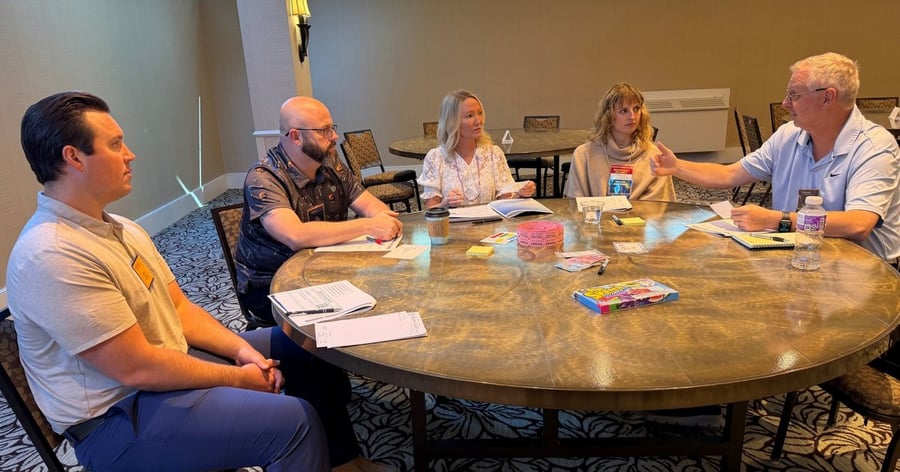
Every trainer knows the moment. You announce a role play activity, and the energy drains from the room like someone opened an airlock.
Here’s the good news: role play works when you call it practice, keep each round down to two or three minutes, debrief right away, and model the skill yourself first.
And the awkwardness? It isn’t a sign the activity is failing. It’s a sign your learners are practicing the uncomfortable conversations, which mirrors what they’ll face on the job.
In a recent episode of the Creative Training Techniques® podcast, Becky Pike Pluth, M.Ed., CEO of The Bob Pike Group, shares the four techniques she uses to take the discomfort out of role-play without losing the learning.
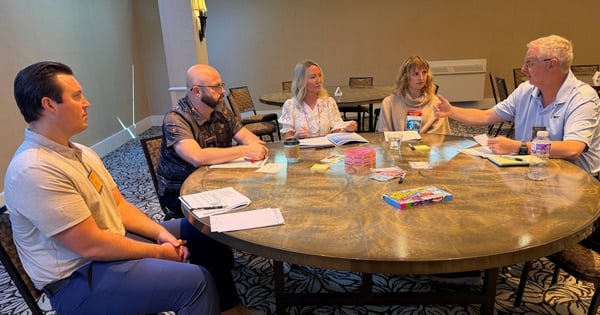
Becky Pike Pluth sees it in nearly every workshop she leads on difficult conversations. Someone always reacts as if she’d asked them to perform an interpretive dance about quarterly reports.
The reaction makes sense. Role-play is awkward. Pretending a colleague is a difficult employee while everyone watches on feels silly. But that awkwardness isn’t a reason to skip practice. It’s the reason practice matters.
Real difficult conversations are uncomfortable. Real feedback is awkward. Real coaching is clunky at first. If learners only practice when it feels easy, they aren’t practicing for the situations they’ll actually face.
Becky once worked with a leader who pushed back on practicing, pointing to their 20 years' experience of giving feedback. So, she asked that leader when they had last provided feedback they were nervous to deliver.
“Last week.”
“How’d it go?”
“Not great.”
20 years of experience, and he still struggled. That’s the gap between knowing about feedback and giving it while your heart is racing and the other person is visibly upset.
Human skills are learned by doing them badly, getting feedback, and doing them again. That’s the heart of Participant-Centered Learning: you build skill by doing, not by watching someone else do it.
Becky’s approach lines up with one of the best-studied methods in workplace learning: behavior modeling training. A meta-analysis by Taylor, Russ-Eft, and Chan reviewed 117 studies with more than 4,200 participants, most of them in real workplaces (ScienceForWork).
The method has five steps: describe the skill, show a model of it, let learners practice, give feedback, and plan for using it on the job (QIC-WD summary). It has large effects on knowledge and skills, and smaller yet positive effects on how people behave at work.
Here’s how Becky’s four techniques map to that research:
| Research step | Becky’s technique |
|---|---|
| Show a model of the skill | Let them practice on you first |
| Give learners a chance to practice | Call it practice, and keep it short |
| Give feedback after practice | Debrief immediately |
| Plan for using it on the job | Your challenge: add one practice session to your next workshop |
The research also found that more practice time helps people build new habits. Short rounds make room for more of them.
Here are Becky’s four techniques, and how to use each one in your next session.
The word “role-play” signals drama and theatrics. “Let’s practice this conversation” sounds professional. “Practical application” works too.
Becky also gives directions quickly. By the time participants realize it’s a role-play, they’ve already found a partner and started practicing. Their brain never gets the chance to decide they don’t want to do it.
Try this: “Find a partner. One of you is the manager, one is the employee. You have two minutes. Go.” Give the scenario on a slide or card so no one waits for instructions.
You don’t need a 10-minute scene. Two or three minutes is enough. Short bursts are less exhausting, and they leave time for more rounds.
Short rounds also fit how adults learn. The 90/20/8 rule recommends involving learners at least every eight minutes, and a quick practice round does exactly that.
The learning isn’t in the practice itself. It’s in the conversation right after. Ask these questions, or put them on a slide:
That’s where the insight comes from.
Ask the person who practiced first, then their partner, then any observers. For more question ideas, see How to Get the Most Out of Your Debriefing Questions.
Many times, Becky offers to play the difficult employee before participants practice with each other. It lowers the stakes, shows that everyone looks awkward at first, and models what 'good' looks like.
She reads the room before doing it, though. Some groups need an example. Others would spot the role-play coming and resist. Choose your approach based on who’s in front of you.
The behavior modeling research points to two simple additions (QIC-WD summary):
Here’s one way to put all of this together for feedback or a difficult-conversations workshop:
Run it again later in the session with a tougher scenario. Each round builds confidence for the real thing.
Free download: The Practice Round Kit
Get this 10-minute plan as a ready-to-use kit: a facilitator script, a debrief question card, a learner scenario worksheet, seven scenario starters, and fixes for when the room resists. Get the free kit →
If someone leaves a workshop having only talked about difficult conversations, they leave with knowledge, not skill. Knowledge doesn’t help much when you’re sitting across from someone who is defensive and upset.
AI doesn’t help in that moment either. No one can pause a tense conversation to paste the other person’s frustration into ChatGPT or Gemini. That approach would cost far more respect than it earns.
Reading, podcasts, and AI tools can build understanding. Only practice builds the ability to respond in real time.
The next time you teach a human skill like feedback, coaching, or conflict management, add at least one short practice session. Do it especially if it feels awkward.
When participants groan, smile and say, “I know, and that’s why we’re doing it.” Discomfort isn’t a sign your activity is failing. It’s a sign it’s working.
When you announce a practice round, what does your group do? Groan, play along, suddenly need a coffee refill, or actually get into it? Tell us in the comments or join the conversation on LinkedIn.
Hear Becky tell these stories in her own words. New episodes of the Creative Training Techniques® podcast come out every Friday.
Related episodes: “The Art of the Debrief,” “‘You Screwed Up’: A Better Way to Give Feedback,” and “Tough Work Conversations,” all on the podcast page.
Want to see these techniques in action and get feedback on your own facilitation? Train-the-Trainer Boot Camp Plus is an extended workshop built around practicing Creative Training Techniques® with real-time feedback from an expert. It’s the same practice-and-debrief approach Becky describes, applied to your training.
Prefer a shorter format? The standard Train-the-Trainer Boot Camp covers 20 engagement strategies and how to handle seven types of difficult participants, in person or virtually.
Training a team of eight or more? Bring a custom, Participant-Centered workshop to your organization with Team Training.
Role-play feels awkward and exposed, especially when colleagues are watching. The word itself suggests acting, which makes it feel less professional than other activities.
Yes. Skills like giving feedback, coaching, and handling conflict are learned by doing. Practice with immediate feedback builds the ability to respond under pressure, which reading alone can’t.
Two to three minutes per round is usually enough. Short rounds keep energy up and leave time for several repetitions.
Ask three questions right away: What did you notice? What worked? What would you try differently?
Try “practice” or “practical application.” For example: “Let’s practice this conversation.”
Give directions quickly so they start before they can object, and offer to go first. When they groan, acknowledge it: “I know, and that’s why we’re doing it.”
When learners know the job well, let them write their own. Research on behavior modeling training shows practice transfers better to the job when learners create the scenarios.
Yes. Breakout rooms work well for pairs. Keep rounds to two or three minutes, share the scenario in the chat, and bring everyone back for the debrief.
It’s a training method with five steps: describe the skill, show a model, let learners practice, give feedback, and plan for on-the-job use. It’s well-supported for building interpersonal skills like conflict management and communication.
The Bob Pike Group has been equipping trainers with practical, proven tools since 1979. Whether you’re looking to improve your session design, build practice into your workshops, or bring our methodology to your entire team, we’re here to help. Reach out to training@bobpikegroup.com or 952-829-1954.